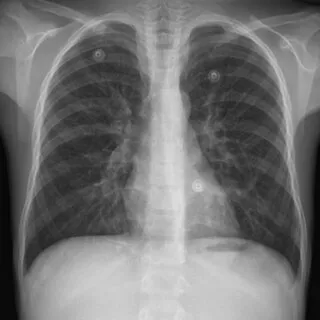
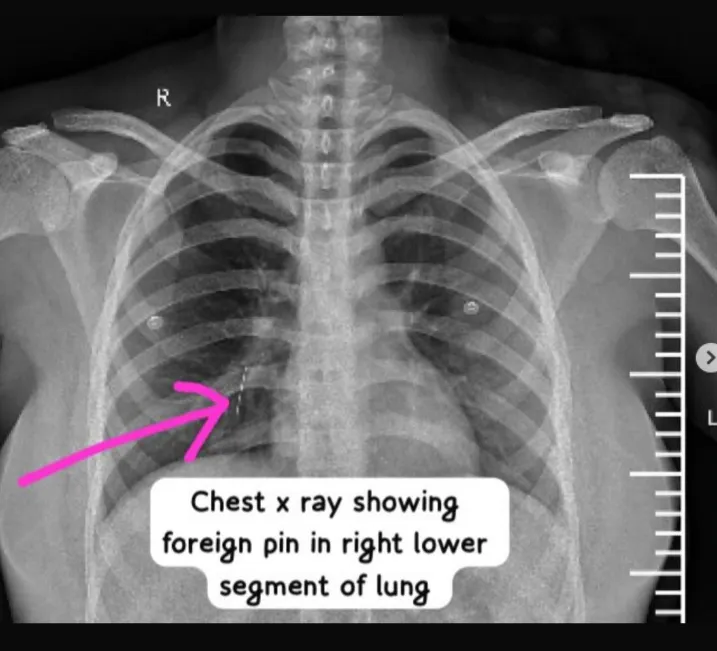
A simple sneeze can sometimes trigger an unexpected medical emergency. Recently, the Department of Pulmonary Medicine at Lopmudra Meera Multispeciality Hospital, Pune. managed a planned foreign body removal after a young woman accidentally inhaled a pin.
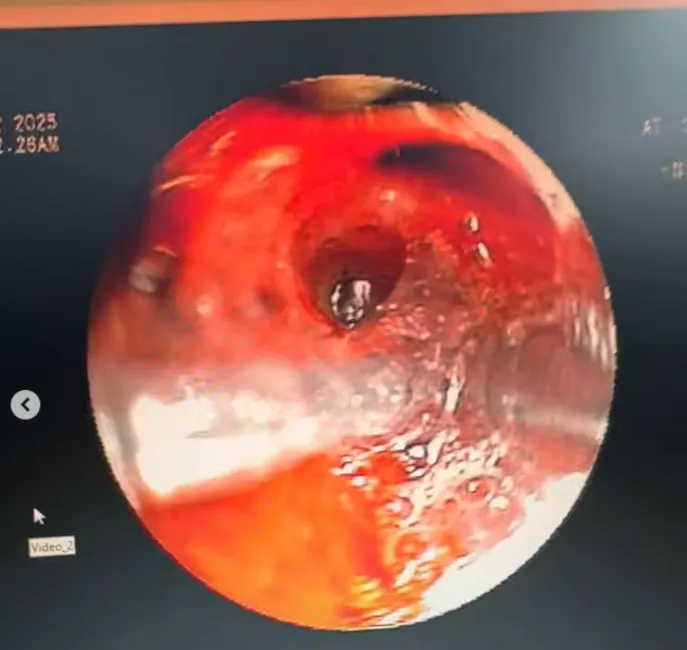
The pin was found lodged in the distal lower airway of the right lung, which required careful evaluation, coordination, and precision. After a detailed virtual bronchoscopy study along with a radiologist, the pin was identified and mapped. During bronchoscopy, with an anesthetist present for airway safety, the pin was successfully removed using forceps under fluoroscopy guidance.
This case highlights why timely medical attention and expert planning are essential in airway foreign body emergencies.
Clinical expertise: Dr. Sneha Tirpude
This procedure was managed under the care of Dr. Sneha Tirpude, Consultant Pulmonologist at Lopmudra Hospital.
Dr. Sneha Tirpude (Pulmonology | General Medicine)
-
MBBS, MD – Pulmonary Medicine
-
DNB – Tuberculosis & Respiratory Diseases / Pulmonary Medicine
-
Experience: 17 Years
She specializes in lung disorders, bronchoscopy, sleep medicine, allergy treatment, and drug allergy testing. She is internationally trained and has completed an allergy fellowship under renowned guidance at King’s College London, UK. She is also a former Assistant Professor and has extensive experience in evidence-based respiratory care.

Real Image Of Patient While The Treatment
Why pin inhalation is a medical emergency
A pin (or any sharp object) inside the airway is high-risk because it can:
-
Injure the airway lining and cause bleeding
-
Move further into smaller airways and become difficult to retrieve
-
Trigger infection, persistent cough, wheezing, or even collapse of a lung segment
-
Cause sudden breathing difficulty in rare cases
Even if the person feels “fine” after the event, a lodged foreign body can silently cause complications. That’s why early assessment matters.
Symptoms to watch for after suspected inhalation
If you suspect you inhaled a small object (pin, seed, nut, tiny plastic part), seek medical help—especially if you notice:
-
Sudden coughing that doesn’t settle
-
Wheezing, especially on one side
-
Chest discomfort or an unusual “pricking” sensation
-
Recurrent fever or chest infections after the incident
-
Breathlessness or reduced stamina
How we planned and performed safe removal
Because the pin was located in the distal lower airway, the team followed a stepwise, safety-first approach:
1) Virtual bronchoscopy + radiology planning
A virtual bronchoscopy study helps visualize the airway route and location before the bronchoscopy begins—especially useful when the foreign body is deep in the lung.
2) Bronchoscopy in a controlled setup (with anesthetist support)
Bronchoscopy allows direct visualization of the airways and is a standard minimally invasive method to remove inhaled foreign bodies. An anesthetist’s presence adds an extra layer of safety for airway control.
3) Fluoroscopy guidance for precision
Fluoroscopy (real-time imaging) helps confirm the pin’s position and supports accurate removal—particularly valuable for sharp or metallic objects lodged deep in the airway.
4) Forceps retrieval
Once the pin was visualized, it was carefully grasped with forceps and removed with controlled technique to minimize airway trauma.
Recovery and aftercare: what patients are usually advised
After foreign body removal, patients are typically monitored for:
-
Comfortable breathing and oxygen levels
-
Temporary cough or throat irritation
-
Any signs of bleeding or infection
-
Need for medicines and follow-up, as advised by the treating doctor
The exact recovery plan depends on the foreign body type, location, and airway condition after removal.
Prevention: avoid holding pins in your mouth
Pins are often held between lips during scarf/dupatta pinning or tailoring. Simple precautions can prevent accidents:
-
Use a pin cushion or magnetic pin holder
-
Avoid holding pins in the mouth—even “for a second”
-
Keep sharp objects away from children
-
If a pin slips into the mouth, avoid sudden talking/laughing—remove it calmly
Frequently Asked Questions
1) What should I do immediately if I think I inhaled a pin?
Seek emergency medical care. Avoid home remedies or forceful coughing attempts. Imaging and clinical evaluation guide safe removal.
2) Can a pin really reach the lung after a sneeze?
Yes. Sudden reflex inhalation during a sneeze or gasp can draw a small object into the airway, where it may lodge in a bronchus.
3) Is bronchoscopy painful?
Bronchoscopy is done with appropriate sedation/anesthesia. Mild throat irritation or cough afterward is common and usually temporary.
4) Why use fluoroscopy guidance during removal?
Fluoroscopy helps with real-time location confirmation and precision—especially when the object is metallic, sharp, or lodged deep.
5) When should I suspect a missed foreign body?
If cough, wheeze, fever, or repeated chest infections continue after a choking/inhalation episode, consult a pulmonologist for evaluation.